

Search question: how do you sleep when noise and light keep waking you up?
A bedroom can look perfectly peaceful at 2pm and turn into a low-budget obstacle course at bedtime. The neighbour starts moving furniture. A streetlight finds the one gap in the curtains. Somebody beside you begins impersonating farm machinery.
If noise or light makes it difficult to fall asleep or wakes you during the night, you are not being fussy. Your sleep environment matters. The NHS lists noise, light, temperature and an uncomfortable bed among the factors that can make sleep harder, and suggests tools such as an eye mask or earplugs when needed.
Why noise and light affect sleep
Sleep is easier when your brain receives a consistent message that the day has ended. Bright or changing light can keep the room feeling active. Sudden sounds can pull your attention back to the outside world, especially when the sound changes in volume or pattern.
The aim is not to build a silent underground cave. It is to reduce the changes and distractions that repeatedly ask your brain to pay attention.
Start with a five-minute bedroom check
Stand in the room at the time you normally go to bed and look for the obvious offenders:
- Light leaking around curtains or beneath the door
- Charging lights, clock displays and glowing standby buttons
- Traffic, trains, neighbours or household noise
- A partner's snoring or late-night viewing
- A phone that flashes, buzzes or lights the room
- Bedding that leaves you too warm, cold or uncomfortable
Fix the biggest interruption first. A small change aimed at the actual problem is more useful than buying six sleepy-looking objects and hoping they form a committee.
How to make a bedroom darker
Close the easy light gaps
Fully close curtains or blinds and check the edges. A lined curtain, removable blackout lining or simple gap adjustment can reduce early sunlight and streetlight.
Turn down small electronic lights
Place the phone face down, dim the alarm clock and remove unnecessary chargers from view. Even when a tiny light does not wake you, it can make the room feel less settled.
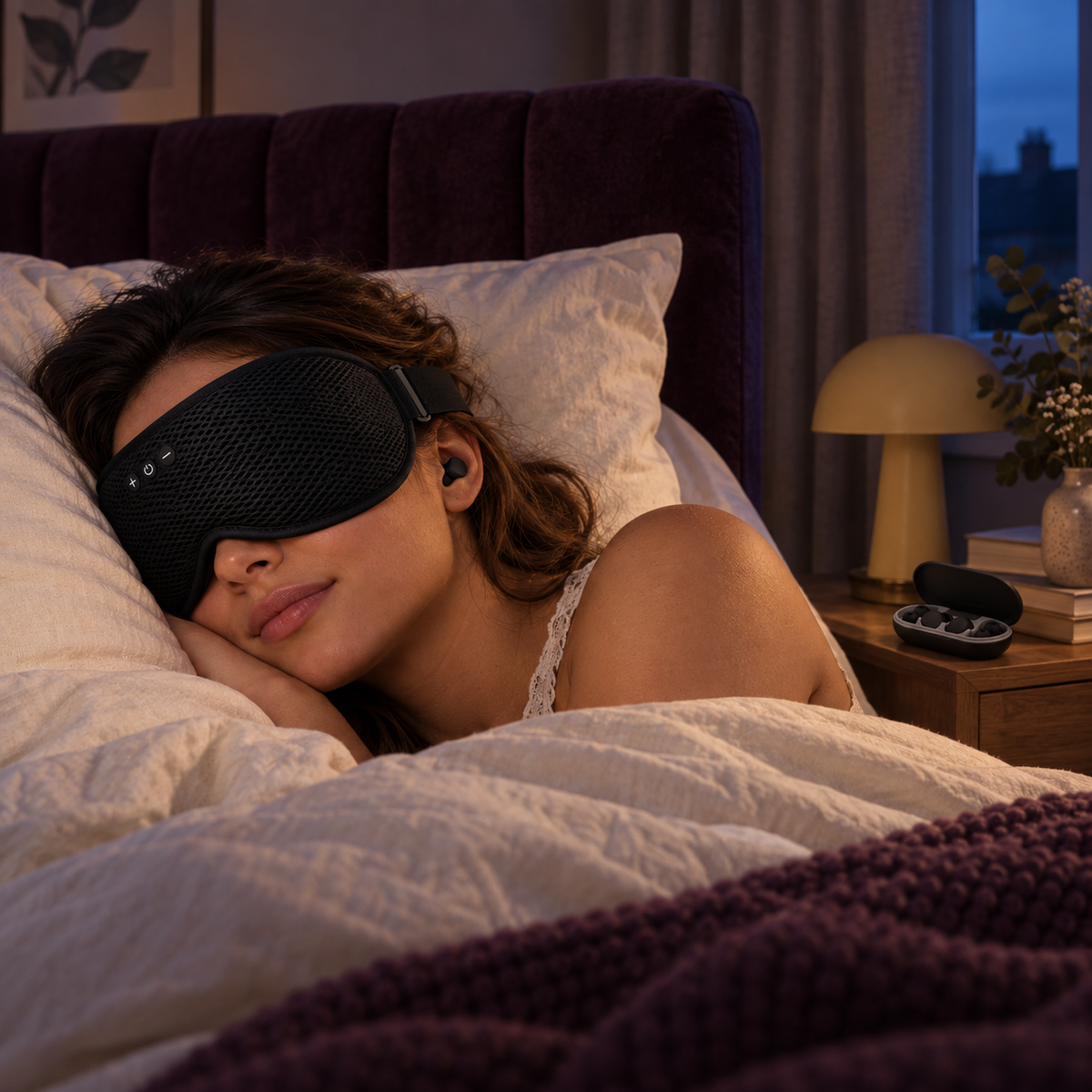
Use a sleep mask when the room cannot change
An eye mask is useful in rented homes, hotels, shared rooms and summer mornings. Look for a shape that blocks light around the nose and sits comfortably without pressing directly on the eyes. An adjustable strap helps when one-size-fits-all turns out to fit nobody.
The Blackout & Chill Bluetooth Sleep Mask combines a contoured light-blocking shape with built-in audio for people who want darkness and sound in one bedtime tool.
How to reduce noise at night
Deal with controllable sounds
Silence notifications, close the door gently and move ticking or humming objects away from the bed. If another household member keeps a different schedule, agree which sounds can be reduced after a certain time.
Use earplugs for changing or intrusive noise
Earplugs can help soften traffic, neighbours and snoring. Fit matters. A plug that seals well but presses painfully into the pillow will not feel like a win at 3am.
Reusable plugs with different tip sizes let you adjust the fit. PipKip's Shut Up Reusable Sleep Earplugs offer up to 36 dB of noise reduction and use a low-profile shape intended to sit more comfortably for side sleepers.
Try steady background sound
Some people find a consistent background sound less distracting than unpredictable noise. Rainfall, gentle audio or white noise can mask changes from outside. Keep the volume low and comfortable. The goal is a stable background, not a private festival.
A compact Bluetooth pillow speaker can bring calming audio closer without requiring full-size headphones in bed.
Should you use a sleep mask and earplugs together?
You can use both when light and noise are separate problems. Introduce one item at a time for a few nights so you can judge comfort and understand what helps. If earplugs make you feel cut off, use them only when needed or combine a mask with low background sound instead.
Make sure you can still hear alarms, smoke alarms or anything important for your safety.
A simple darker and quieter bedtime setup
- Dim the main lights during the final hour before bed.
- Put the phone on silent and face down.
- Close curtains and cover distracting standby lights.
- Choose earplugs, steady background sound or both based on the noise.
- Fit your eye mask after you are comfortable on the pillow.
- Keep the setup consistent for several nights before judging it.
When the problem needs more than a bedroom change
Regular loud snoring, gasping, choking or interrupted breathing can be signs of sleep apnoea. Speak to a GP rather than relying on earplugs to hide the sound. You should also seek advice when poor sleep continues for months or affects everyday life.
The PipKip verdict
Start with the nuisance that keeps winning. Block the light you cannot remove, soften the noise you cannot control and keep the room comfortably predictable. Your bedroom does not need to be perfect. It needs to stop behaving like it wants your attention.
Helpful source: Read the NHS guidance on insomnia and creating a dark, quiet bedroom.


Leave a comment
This site is protected by hCaptcha and the hCaptcha Privacy Policy and Terms of Service apply.